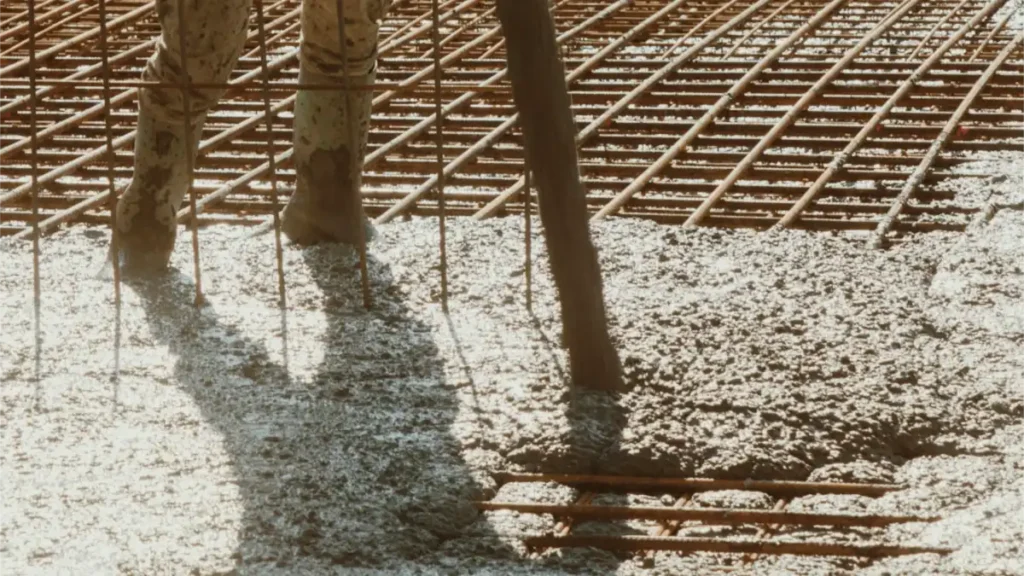
Every fall in Anchorage, somebody tries to squeeze in one more pour. The forms are set, the truck is booked, and the forecast says 38 degrees by Thursday. Cold weather concrete in Alaska comes down to one question: will the slab, footing or pad come out of winter as solid as it went in?
The honest answer: concrete can be poured in cold weather, and it is poured all winter on commercial jobs across Alaska. But it only works when the ground underneath is ready and the concrete is protected until it can handle the cold on its own. Skip either one and the cost shows up at breakup, as cracks, heaved slabs and settling that no surface repair can fix.
This guide covers what “cold weather” actually means for concrete, why frozen ground is the real deal-breaker, the Anchorage calendar for pouring, and what has to happen on the site before the truck shows up.
In Short
- The American Concrete Institute treats it as cold weather concreting when the air temperature has fallen, or is expected to fall, below 40°F during the protection period.
- Fresh concrete has to be kept from freezing until it reaches about 500 psi of compressive strength, which typically takes a couple of days with proper protection.
- Never pour on frozen ground. Frozen subgrade settles and heaves as it thaws, and the slab cracks with it.
- In Anchorage, ground frost usually sets in between mid-October and early November, earlier on the upper Hillside.
- The cheapest cold-weather pour is one where the excavation, base and drainage were finished before freeze-up.
What Counts as “Cold Weather” for Concrete?
The industry standard is ACI 306, the American Concrete Institute’s guide to cold weather concreting. Its definition is simple: cold weather conditions exist when the air temperature has fallen to, or is expected to fall below, 40°F during the protection period, meaning the days after placement when the concrete is still vulnerable.
That threshold matters because concrete doesn’t “dry” to get hard. It cures through a chemical reaction between cement and water called hydration. Below about 40°F that reaction slows down sharply, so strength builds much more slowly. And if the water in fresh concrete freezes before it has gained enough strength, it expands and breaks the internal structure apart.
In Anchorage, that 40°F line is crossed for most of the year. Fall nights drop below it in September, and spring days may not climb above it until well into May. So the real question is rarely “is it cold?” It’s “is the site and the plan ready for cold?”
The 500 psi Rule: How Long Concrete Must Be Protected
The key number in cold weather concreting is 500 psi. Concrete protected from freezing until it reaches a compressive strength of about 500 psi can survive a single freezing event without lasting damage. Well-proportioned mixes kept warm usually reach that point in about two days.
Reaching 500 psi is the minimum, not the finish line. Concrete that will see repeated freeze-thaw cycles in service, like a driveway, garage apron or exterior slab, needs far more strength before it faces a real Alaska winter. That’s why winter pours rely on longer protection periods, not just a couple of nights under blankets.
Protection usually means some combination of:
- Insulated curing blankets over slabs and footings, extended past the edges of the pour.
- Heated enclosures or tenting with heaters for walls and larger placements, vented so combustion gases don’t damage the fresh surface.
- A cold weather mix from the ready-mix supplier, often with high-early-strength cement, a lower water-cement ratio and air entrainment for freeze-thaw durability.
- Accelerating admixtures, with non-chloride accelerators where reinforcing steel is present.
- Temperature monitoring in the concrete, not just the air, through the whole protection period.
The exact mix and protection plan depends on the pour. What no blanket or admixture can do is fix the ground the concrete is sitting on.
Why Frozen Ground Is the Real Deal-Breaker
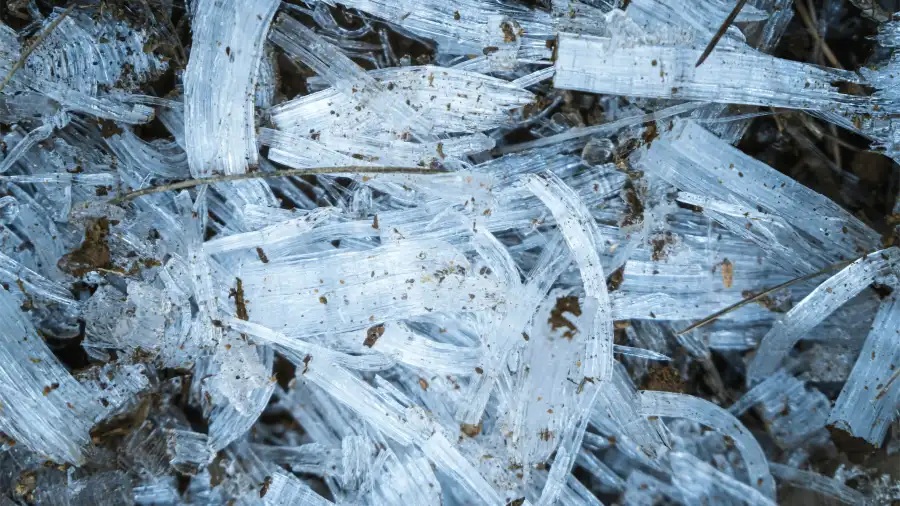
Building departments and concrete specs agree on one rule above all: do not place concrete on frozen subgrade. Air temperature can be managed with blankets and heat. Frozen ground under a slab is a structural problem waiting for spring.
Here’s what happens when concrete goes onto frozen ground:
- It settles when the ground thaws. Frozen soil holds ice. When that ice melts, the soil loses volume and the slab above it drops unevenly.
- It heaves while the ground freezes deeper. Frost-susceptible soils pull in water and grow ice lenses, lifting and cracking whatever sits on top.
- It cures unevenly. A frozen base pulls heat out of the bottom of the pour, so the slab gains strength unevenly and can stay weak underneath.
- It can’t be compacted. You can’t properly compact frozen material, so the “solid base” is full of voids that collapse when it thaws.
Cold weather guidance generally calls for every surface the concrete touches, including the subgrade, forms and rebar, to be free of snow, ice and frost and above freezing at placement. If the base has frozen, the frost either has to be thawed with ground heaters or blankets and re-compacted, or dug out and replaced with properly compacted fill.
The same rule applies to any hardscape. Backfill with frozen chunks can’t be compacted, and the failure doesn’t show until it thaws and settles the next summer. We cover that in more detail in why site compaction matters for a patio, and the spring result is what we describe in fixing sunken yards in Anchorage.
When Can You Pour Concrete in Anchorage?
There’s no single date, because concrete season ends on temperatures, not the calendar. But the pattern is predictable:
| Window | Ground conditions | What it means for a pour |
|---|---|---|
| Late May – August | Thawed, dried out after breakup | Best window. Normal practices for most residential pours. |
| September | Warm ground, cold nights below 40°F | Still workable. Plan blankets for overnight protection. |
| October | Ground cooling; frost starts on upper Hillside | Full cold weather practices. Confirm subgrade is unfrozen the day of the pour. |
| Mid-Oct – early Nov | Frost penetrating the ground at lower elevations | Residential pours get risky and costly. Base must be thawed or protected. |
| Winter | Frozen ground, deep cold | Commercial jobs with heated enclosures and ground thawing only. |
| April – mid May (breakup) | Saturated soil over frozen layers | Usually wait. Wet, half-frozen ground is a poor base. |
Location shifts those dates. In a typical year, ground frost arrives between mid-October and early November near sea level, and two or three weeks earlier on lots up Bear Valley and the upper Hillside. Shaded, north-facing sites lock up first. A cold, snowless October drives frost down fast, while an early heavy snowfall can actually insulate the ground and slow it.
Spring has its own trap. During breakup, the top layer of soil is soaked while the ground below is still frozen. That’s a poor surface to pour on, for the same reasons it’s a poor surface to grade. Most residential projects do better waiting until late May, which is also when we recommend starting spring landscaping projects in Anchorage.
Site Prep: What Has to Happen Before the Truck Shows Up

A cold weather pour succeeds or fails on groundwork done weeks earlier. These are the steps that keep a fall pour on schedule:
- Excavate early. Footings, slab areas and pads cut and shaped while the ground is still easy to dig. Our residential site work and commercial site work crews handle this groundwork ahead of a pour.
- Strip organics and unstable soil. Topsoil and organic material compress and hold water. They come out before any base goes in.
- Build a compacted gravel base. A well-drained, compacted granular base gives the slab even support and is less frost-susceptible than native silty soils. Geotextile fabric helps where the subgrade is soft.
- Get the drainage right. Water standing under or beside a slab freezes, expands and lifts. Grade the site so water runs away from the pour.
- Protect the base from frost. If the pour is days away and nights are freezing, cover the prepared base with insulated blankets so frost doesn’t get into it.
- Keep the site clear of snow. Snow on the subgrade melts into it. Plan where snow will go so it isn’t pushed onto the pour area or piled against fresh concrete.
Drainage deserves extra attention in Anchorage. Hillside lots often sit on glacial till that drains in one spot and holds water in the next, while lower areas have siltier soils that stay wet. A base that works on one lot can fail on the lot next door. Our guide to landscape grading and drainage explains how to read those differences before you build.
Concrete vs. Asphalt: Which Season Is Tighter?
If you’re deciding how to surface a driveway or pad, it helps to know both materials have cold weather limits, but they’re different limits.
| Concrete | Hot-mix asphalt | |
|---|---|---|
| Cold weather limit | Can be poured in cold air with protection; ground must be unfrozen | Needs surface temperatures around 50°F and rising to compact |
| Season in Anchorage | Practical residential window into October | Usually ends around mid-September |
| What protection does | Blankets and heat can extend the season | No real fix for cold ground; the mat cools too fast |
| Common to both | Base and drainage decide how long it lasts | Base and drainage decide how long it lasts |
Either way, a base built this fall can settle through winter and breakup and be ready for a surface first thing next season. See our asphalt paving in Anchorage page for how we handle grading, base compaction and drainage before paving. If your existing pavement is already breaking up, our guide to why asphalt cracks in Alaska explains what each crack pattern means.
If You Miss the Window This Year
Missing the pour window doesn’t mean losing the season. The groundwork doesn’t need warm weather the way fresh concrete does, as long as it’s finished before deep frost:
- Do the excavation and base now. Cut, compact and grade this fall, let it sit through winter and breakup, and pour on a settled, proven base in late May.
- Fix the drainage before freeze. Standing water in October is an ice sheet in December and a soft spot in April.
- Winterize an unfinished site properly. Rough-grade it, stabilize cuts, cover prepared base, and mark every hole and edge with tall stakes so plow operators can see them.
- Keep gravel access plowable. If the driveway to the build site is gravel, a late-season grading pass keeps it smooth enough to plow all winter.
Protecting New Concrete Through Its First Anchorage Winter
A slab poured in late summer or fall goes into winter young. A few habits help it get through without damage:
- Go easy on ice melt. Some deicers damage concrete, especially young concrete, and most stop working in deep cold anyway. Sand gives traction at any temperature. Our comparison of salt vs. sand for Alaska de-icing explains the trade-offs, and our ice control services in Anchorage are planned around new surfaces.
- Mark the edges for snow removal. Plow blades can chip slab edges and aprons. Stake them before the first storm, the same way you would protect landscaping during snow removal.
- Keep meltwater moving. Don’t pile snow against new slabs or foundations, where melt can refreeze and pry at joints. When there’s nowhere left to put it, snow hauling clears the space.
Get Your Site Ready Before the Ground Freezes
Alaska Landworks handles concrete services in Anchorage from the ground up: site work, grading, compacted base, and the pour itself, including garage and shop slabs, driveways and walkways, equipment pads, and foundations and footings. In winter, the same team keeps properties open with snow plowing, hauling and de-icing, so a project site stays accessible until the next pour window opens.
If there’s a pour on your list, the best time to plan it is before frost is in the ground. Call (907) 802-5000 or request a concrete estimate to get a site visit on the calendar.
Frequently Asked Questions
How cold is too cold to pour concrete?
There’s no single cutoff air temperature. Under ACI 306, cold weather practices apply when the air is at or expected to fall below 40°F during the protection period. With blankets, heat and a cold weather mix, concrete can be poured below that, but never on frozen ground.
Can you pour concrete on frozen ground in Alaska?
No. Frozen subgrade settles and heaves as it thaws, and the concrete cracks with it. Frost must be thawed and the base re-compacted, or the frozen material removed and replaced, before the pour.
How long does concrete need to be protected from freezing?
Until it reaches about 500 psi of compressive strength, which usually takes around two days with proper protection. Concrete that will face repeated freeze-thaw cycles needs longer protection and more strength.
When does concrete season end in Anchorage?
For most residential pours, practically in October, before frost gets into the ground. Ground frost usually arrives between mid-October and early November at lower elevations and earlier on the upper Hillside.
Is it better to pour concrete in fall or spring in Alaska?
Late summer and early fall are usually best, because the ground is dry and thawed. Spring breakup leaves soil saturated over frozen layers, so most residential pours wait until late May.
What can I do this fall if I can’t pour until next year?
Finish the excavation, compacted base and drainage before freeze-up, then winterize the site. A base that settles through winter and breakup gives you a better surface to pour on in spring.
Does ice melt damage new concrete?
Some deicers can damage concrete, especially in its first winter. Sand provides traction at any temperature without chemical exposure, so it’s the safer choice on new slabs.