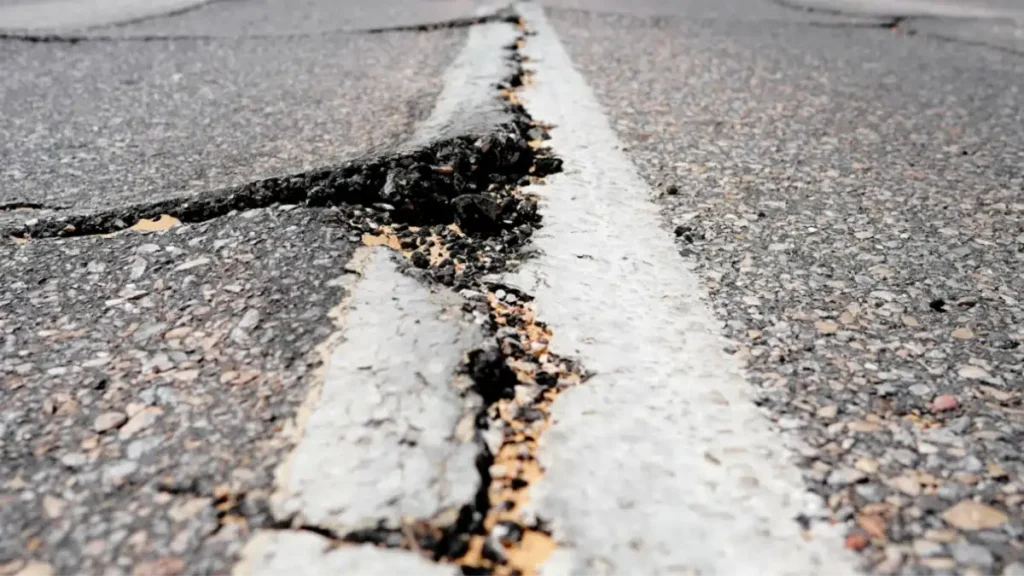
Every spring, Anchorage driveways and parking lots come out from under the snow looking older than they did in October. A hairline crack is now finger-wide. A smooth section has a hump in it. The pothole by the garage apron is back, bigger than last year. If you’ve wondered why asphalt cracks in Alaska so much faster than it does down south, the answer is mostly under the surface.
None of that is bad luck. Alaska pavement lives through months of frozen ground, dozens of freeze-thaw swings, and a breakup season that soaks the base while the ground below is still frozen. The main driver behind most of that damage is frost heave, and once you understand how it works, it becomes clear which cracks are cosmetic, which are warnings, and which mean the problem is under the asphalt, not in it.
In Short
- Most Alaska asphalt cracking starts with water, not traffic. Water gets into the pavement or the soil below, freezes and expands.
- Frost heave happens when frost-susceptible soil under the pavement pulls in water and forms ice lenses that lift the surface. When they thaw, the support drops out.
- Freeze-thaw cycles widen small cracks every time water in them freezes. Anchorage’s shoulder seasons and winter Chinooks create a lot of cycles.
- Hairline cracks can usually be crack sealed. Alligator cracking, heaves and soft spots mean the base or drainage has failed.
- The lasting fix is a well-drained, properly compacted base. Surface repairs on a failed base don’t hold.
What Is Frost Heave?
Frost heave is the upward movement of the ground when water in the soil freezes. It isn’t just water expanding in place. In frost-susceptible soils, freezing pulls more water up from below through tiny pores in the soil, and that water collects into layers of pure ice called ice lenses. As the lenses grow, they lift whatever sits on top, including your driveway.
Three things have to be present for frost heave to happen:
- Freezing temperatures that push frost down into the ground.
- Frost-susceptible soil, usually silts and fine-grained soils that wick water upward. Clean, coarse gravel is much less prone to heave.
- A water supply, such as a high water table, poor drainage, or meltwater soaking in beside the pavement.
Remove any one of the three and frost heave shrinks dramatically. You can’t change Alaska’s temperatures, but you can control the soil under the pavement and where the water goes. That’s what good base preparation and grading and drainage do.
How Frost Heave Cracks Asphalt
Frost heave damages pavement twice each year, once going up and once coming down.
Going up: winter lift
Ice lenses rarely grow evenly. Wetter spots, shaded areas and pockets of silty soil heave more than the ground around them. Asphalt is flexible, but not that flexible. When one section lifts and the section next to it doesn’t, the pavement bends and cracks at the transition. That’s why winter heaves often show up as humps with cracks across them, especially at driveway edges, over old utility trenches, and where pavement meets a garage slab.
Coming down: spring thaw weakening
The bigger damage often happens at breakup. Pavement and the ground under it thaw from the top down. For weeks, the upper layer is soaked with meltwater from the ice lenses, while the ground below is still frozen and won’t let it drain. Saturated base material loses much of its strength, and every vehicle that drives over it flexes the asphalt more than it was built to handle.
That’s when fatigue cracking spreads fastest and potholes appear almost overnight. It’s also why some roads post spring load limits during breakup, and why yards with the same drainage problem end up sunken and spongy every spring.
Freeze-Thaw Cycles: How Small Cracks Get Big
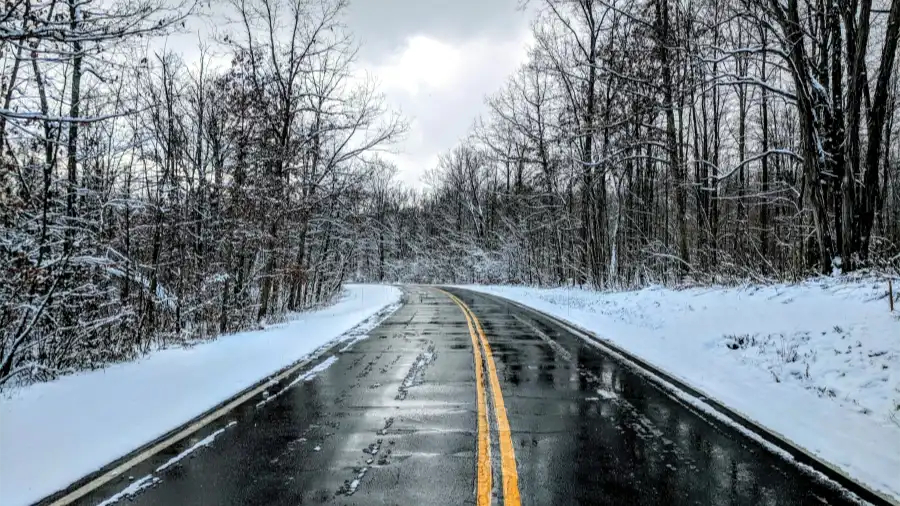
Frost heave is the deep problem. Freeze-thaw is the surface problem that makes every crack worse. Water expands by roughly nine percent when it freezes. When it fills a crack and freezes, it pries the crack wider. When it thaws, more water flows into the bigger gap, and the next freeze pushes further.
Anchorage is hard on pavement because its winters aren’t steadily cold. Fall and spring swing above and below freezing almost daily, and winter Chinooks melt the snowpack for a day or two before a hard refreeze. Those same cycles build ice layer by layer on walkways and lots, which is why ice control in Anchorage is planned around thaws, and they work on every open crack in the pavement at the same time.
Some ice melt products add to the problem by increasing the number of freeze-thaw cycles a surface goes through. Sand gives traction at any temperature without that effect. Our guide to salt vs. sand for Alaska de-icing compares both.
Other Reasons Alaska Asphalt Cracks
Frost heave and freeze-thaw get most of the blame, but several other factors set them up:
- Thermal cracking. Asphalt shrinks in deep cold. When it can’t shrink evenly, it splits, often in straight lines across a driveway or lot.
- A thin or poorly compacted base. A base that was too thin, never compacted, or built on organic soil can’t carry loads once it’s wet.
- Poor drainage. Water ponding on or beside pavement feeds frost heave and soaks into every crack. The same low spots that ice up every winter are usually where pavement fails first.
- Aging and oxidation. Sun and air dry out the asphalt binder over time, making the surface brittle and gray.
- Heavy loads in spring. Delivery trucks, RVs and equipment on a thaw-weakened base cause damage that wouldn’t happen in July.
- Plow damage. Steel blades catching raised edges and heaved sections chip and gouge the surface. Marking edges and choosing the right equipment helps, as we cover in managing snow on driveways and pathways.
Types of Asphalt Cracks and What They Mean
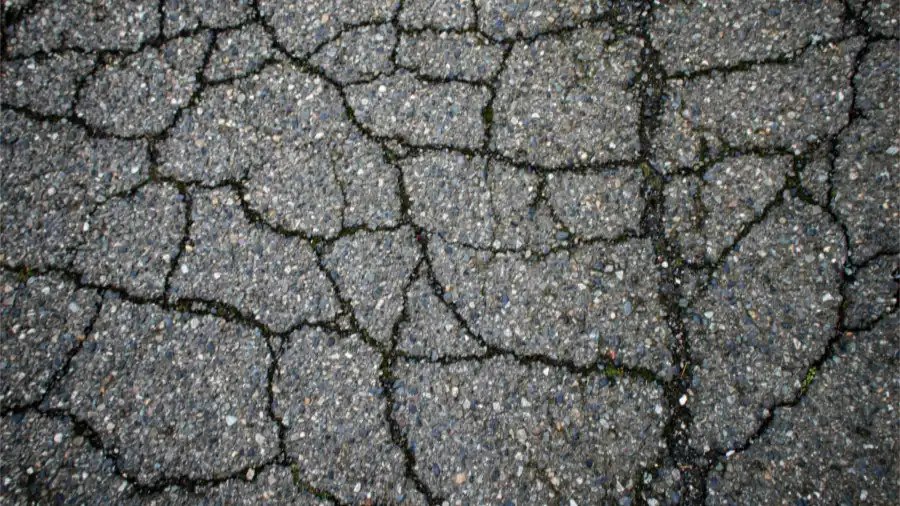
Not every crack means the same thing. Reading the pattern tells you whether you have a surface issue or a base issue.
| Crack type | What it looks like | Usual cause | What to do |
|---|---|---|---|
| Hairline / longitudinal | Thin cracks along the length of the pavement | Aging, shrinkage, early fatigue | Crack seal before winter |
| Transverse (thermal) | Straight cracks across the width, evenly spaced | Cold-weather shrinkage | Crack seal; monitor width |
| Edge cracking | Cracks and breakup along driveway or lot edges | Weak edge support, water at the shoulder, plow strikes | Fix drainage and edge support; patch |
| Frost heave cracks | Humps or ridges with cracks across them | Ice lenses in frost-susceptible soil | Address subgrade and drainage; patch or rebuild section |
| Alligator (fatigue) | Interconnected cracks like a reptile’s skin | Base failure, often from spring saturation | Remove and repair base; surface fixes won’t last |
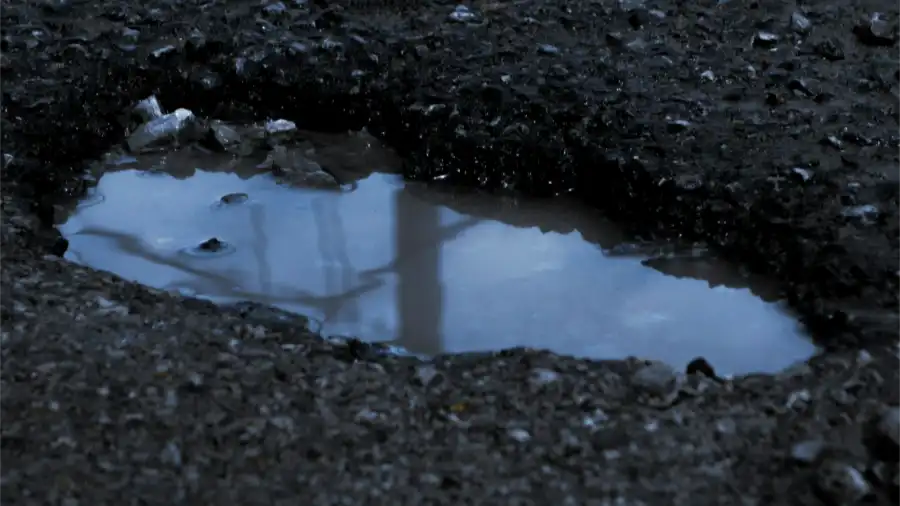
| Potholes | Bowl-shaped holes through the surface | Water in cracks plus traffic on a weak base | Cut out and hot-mix patch |
A useful test is to walk the pavement right after a rain. Cracks that stay dry underneath are usually surface issues. Spots where water disappears into the pavement, stays wet long after the rain stops, or where the surface moves underfoot point to a base that’s already compromised.
How to Prevent Frost Heave Damage
The best defense happens before the asphalt goes down. Pavement is only as good as what’s under it.
Build the base right
Strip organic material and soft native soil, then build up a compacted granular base that drains well and is far less frost-susceptible than silt. Geotextile fabric helps separate the base from soft subgrade. This is the groundwork our site work crews handle before any surface goes down, and the same compaction rules apply to patios, as we explain in why site compaction matters.
Control the water
Shape the surface so water sheds off it, keep ditches open, and size culverts for breakup flows. Downspouts that dump across pavement and low spots beside driveways feed frost heave directly. Fixing them with proper grading is usually cheaper than any pavement repair.
Time the work for Alaska’s seasons
Base and drainage work can run until ground freeze, usually between mid-October and early November at lower elevations. Paving itself has a shorter window. Hot-mix asphalt needs surface temperatures around 50°F and rising, so Anchorage’s paving season usually ends around mid-September. The same frozen-ground rules apply to concrete, explained in cold weather concrete in Alaska.
Seal cracks before freeze-up
Crack sealing keeps water out of the pavement base. Cracks are cleaned out and filled with a hot, rubberized sealant that flexes with temperature changes. It’s one of the least expensive ways to extend pavement life, and the timing matters: sealing in late summer or early fall stops water from getting in before the first freeze.
Manage snow and ice with the pavement in mind
Don’t pile snow where meltwater will run back across or under the pavement. When storage runs out mid-winter, snow hauling removes the piles before breakup turns them into standing water. Mark pavement edges before the first storm so plow operators don’t catch them.
Repair Options: Crack Seal, Patch or Rebuild?
The right repair depends on what’s failing, not how bad it looks.
| Condition | Recommended repair | Why it works |
|---|---|---|
| Hairline and thermal cracks, surface otherwise solid | Crack sealing | Keeps water out through another winter |
| Potholes and failed sections in otherwise good pavement | Asphalt patching (cut, refresh base, hot-mix) | Stops local failures from spreading |
| Widespread alligator cracking, heaves, soft spots | Base and drainage repair, then repave | Surface money on a failed base is spent twice |
| Repeated heave in the same spot | Excavate frost-susceptible soil, rebuild base, fix water source | Removes one of the three conditions for heave |
For gravel driveways that heave and pothole every year, better drainage and a properly built base may be the first step. Once that’s in place, a gravel-to-asphalt conversion gives you a surface that holds up far better through breakup.
Can Frost Heave Be Fixed Without Repaving?
Sometimes. If heave is limited to one area, such as a wet corner, an old trench line or a spot beside a downspout, it’s often possible to cut out that section, remove the frost-susceptible soil, rebuild the base with free-draining material, solve the water source and patch the surface. That’s far cheaper than repaving the whole driveway.
If heaving and alligator cracking cover most of the surface, the base has failed across the board. Patching individual spots just chases the problem around. In that case, the better plan is usually to rebuild the base during excavation season and pave once, properly, early in the next paving season.
Get Your Pavement Checked Before Next Breakup
Alaska Landworks provides asphalt paving in Anchorage and the Mat-Su, including driveways, parking areas, private roads, resurfacing and gravel-to-asphalt conversions. Every project starts with the grading, base compaction and drainage that decide how long pavement actually lasts. In winter, our team plows, hauls and de-ices commercial and residential properties, so we plan surfaces around how they hold up in January, not just how they look in August.
If your driveway or lot is heaving, cracking or potholing every spring, call (907) 802-5000 or request an asphalt estimate to get a site visit on the calendar for next season.
Frequently Asked Questions
Why does asphalt crack so much in Alaska?
Water gets into the pavement and the soil below it, then freezes and expands. Frost heave lifts the pavement in winter, thaw-weakened base lets it flex in spring, and repeated freeze-thaw cycles widen every crack.
What is frost heave in a driveway?
Frost heave is when water in frost-susceptible soil under the driveway freezes into ice lenses and lifts the pavement. It shows up as humps, ridges and cracks, and often settles unevenly when it thaws.
Can you stop frost heave?
You can greatly reduce it. Frost heave needs freezing temperatures, frost-susceptible soil and water. A compacted, free-draining gravel base and good drainage remove the soil and water conditions.
When should cracks be sealed in Anchorage?
Late summer to early fall, before the first freeze. Sealing then keeps water out of the cracks through the winter, when freeze-thaw would otherwise widen them.
What does alligator cracking mean?
Interconnected cracks that look like a reptile’s skin usually mean the base under the asphalt has failed, often from spring saturation. Crack sealing won’t fix it; the base needs repair.
Is gravel or asphalt better for frost heave?
Both are affected by frost-susceptible soil underneath. Gravel flexes and can be re-graded, while asphalt cracks when the ground moves. In either case, the base and drainage matter most.
Why do potholes appear in spring?
During breakup, the base is soaked with meltwater while the ground below is still frozen and can’t drain. Traffic on that weak base breaks the surface, and water in cracks finishes the job.