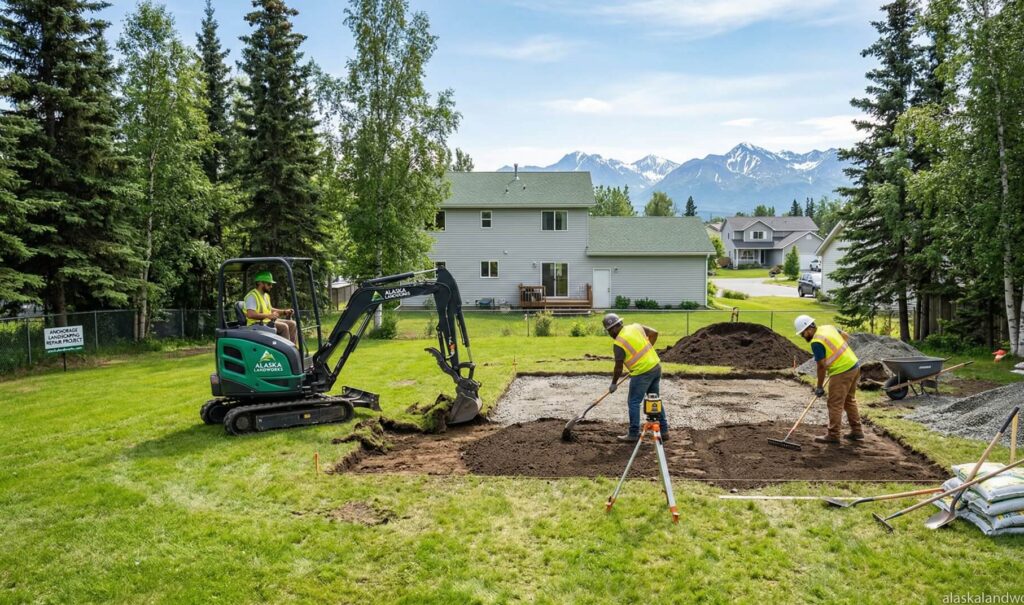
If you own a home in Anchorage, you are likely familiar with the messy reality of “breakup season.” As the winter snow melts, it reveals exactly how your landscape handles water. For many homeowners, the spring melt uncovers a frustrating problem: sunken yards, massive puddles, and spongy, unusable lawns.
While it is easy to blame the heavy Alaskan snowfall, the root cause of pooling water and uneven lawns usually lies beneath the surface. It comes down to the shape and slope of your land. If your yard resembles a bowl rather than a gentle slope, you are dealing with a drainage issue that requires professional intervention.
This is where residential grading comes in. Let’s dive into why yards sink in Anchorage, the hidden dangers of poor drainage, and why professional residential site work is the only long-term fix.
What Causes Sunken Yards in Anchorage?
A perfectly flat or sunken yard doesn’t happen overnight. In Southcentral Alaska, several environmental and structural factors contribute to the deterioration of your landscape’s slope.
1. The Brutal Freeze-Thaw Cycle
Anchorage experiences intense temperature fluctuations. As the ground freezes in the winter, the moisture in the soil expands, causing “frost heave.” When the ground thaws in the spring, the soil contracts. Over years of this continuous cycle, the soil structure breaks down and settles unevenly, creating dips and craters in your lawn.
2. Poor Initial Site Work
As we’ve discussed in our previous article, When Site Work Fails, Everything Follows, the foundation of any good landscape is the dirt it’s built on. If the initial contractor who built your home or installed your lawn rushed the earthmoving process, failed to compact the soil properly, or didn’t establish a “positive grade” (a slope angling away from the house), settling is inevitable.
3. Decomposing Organic Matter
If tree stumps, large roots, or excess organic debris were buried under your lawn during construction, they will eventually rot. As they decompose underground, they leave voids. The topsoil then collapses into these empty spaces, resulting in sudden sunken patches across your yard.
The Hidden Dangers of a Sunken Yard
A sunken yard is more than just an eyesore; it is an active threat to your property’s structural integrity and the health of your landscape. Ignoring poor landscape grading and drainage can lead to severe, costly consequences.
Foundation Damage and Flooding
This is the most critical risk. If your yard slopes toward your home, spring snowmelt and summer rain will pool directly against your concrete foundation. Overturn, this hydrostatic pressure forces water through micro-cracks, leading to flooded basements, crawlspace mold, and structural degradation.
Dead and Diseased Turf
Grass roots need oxygen. When a sunken yard holds standing water for days on end, it drowns the root system of your lawn. This is why low spots are often characterized by yellowing, dead grass, or invasive moss.
Ice Dam Safety Hazards
When water pools in sunken areas across your driveway or walkways during the day, it freezes into dangerous, slick ice patches overnight. Proper grading is a vital component of holistic winter safety and complements your standard snow services.
Mosquito Breeding Grounds
Standing water in sunken Alaskan yards is a prime breeding habitat for mosquitoes, turning your summer outdoor spaces into miserable environments.
What is Residential Grading and How Does it Work?
Grading is the process of reshaping the earth to control water flow and create a stable, level base. The primary goal of residential grading is to establish “positive drainage”—ensuring that water naturally flows away from your home’s foundation and off your property safely, without flooding your neighbors.
Fixing a sunken yard isn’t as simple as just dumping a few bags of dirt into a puddle. It requires a calculated approach, heavy machinery, and an understanding of soil mechanics.
The Professional Grading Process:
- Site Assessment and Utility Locating: Before any dirt is moved, professionals evaluate the current topography to determine where the water should go. This often involves planning for swales (shallow drainage ditches) or French drains.
- Cutting and Filling: High spots are scraped down (cutting), and low spots are filled in.
- Compaction: This is a step DIYers ooften miss. Loose soil will just sink again. The earth must be mechanically compacted to ensure a solid, lasting base.
- Applying Topsoil: Once the subgrade is established, high-quality residential topsoil is spread evenly across the surface. Alaskan soil often lacks vital nutrients, so bringing in rich, screened topsoil is essential for supporting future plant life.
- Finishing and Seeding: The final step involves smoothing the surface for a pristine look. From here, homeowners usually opt for hydroseeding to quickly establish a strong, erosion-resistant root system.
(For more information on managing water flow on a municipal level, you can read the EPA’s guidelines on residential stormwater management.)
Why You Shouldn’t DIY Major Yard Grading
It can be tempting to rent a skid steer and attempt to fix a sunken yard yourself. However, amateur grading often makes the problem worse.
Without a laser level and an understanding of drainage slopes, you might accidentally redirect water straight into your basement or flood your neighbor’s property—leaving you liable for damages. Furthermore, improper compaction will simply lead to the new dirt washing away during the next heavy rain.
If you are planning to upgrade your curb appeal this year, whether you live in Eagle River or South Anchorage, residential site work must be your first step. Beautiful residential landscape design & install projects—like patios, retaining walls, or new garden beds—will ultimately fail if the ground beneath them is sinking and waterlogged.
Secure Your Foundation and Reclaim Your Lawn
Your landscape should be a functional, beautiful extension of your home, not a swamp you have to navigate around. If you are dealing with spongy lawns, persistent puddles, or water creeping too close to your foundation, it is time to reshape the earth.
At Alaska Landworks, we specialize in the heavy lifting. From precision grading to comprehensive residential site work, our fleet is equipped to handle the unique challenges of Alaskan soil.