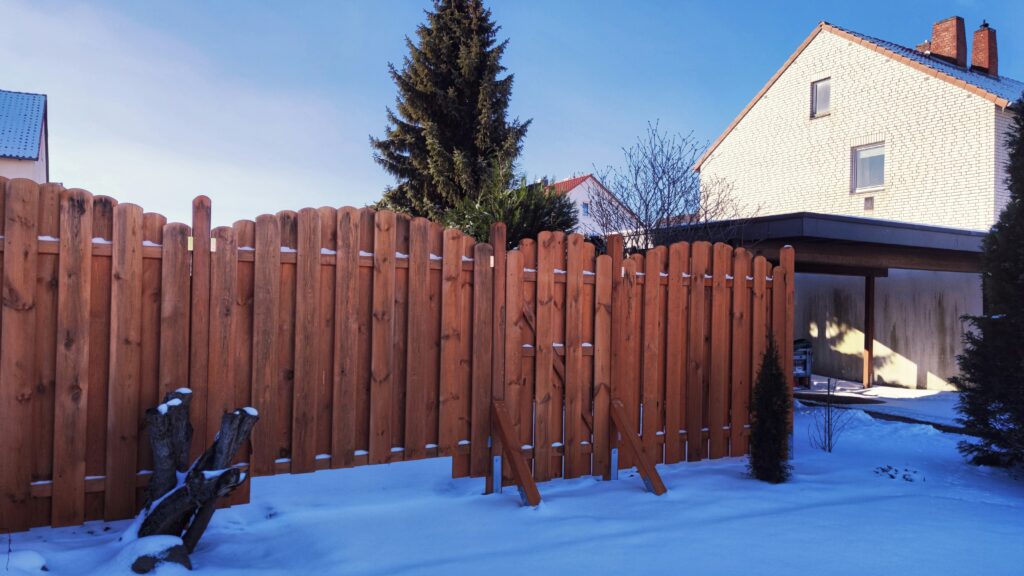
Fencing anchorage properties isn’t just about creating a barrier—it’s about building something that lasts through movement, moisture, and high wind. And when fences fail here, the reasons usually go beyond the usual wear and tear.
Anchorage terrain is unpredictable. Frost heave lifts posts out of alignment, clay soils hold water too long, and sudden windstorms test materials and anchoring. We’ve been called to replace fences that were installed just a year or two earlier—all because the contractor didn’t account for local ground conditions. If your fence is leaning, separating at the joints, or cracking around the posts, the issue started at install—not after.
The Most Common Fence Failures Are Preventable
We’ve been called to replace fences that looked fine a year earlier but failed completely by the second or third winter. In nearly every case, the problem wasn’t the wood or vinyl—it was how the fence was installed. Poor site prep, rushed labor, or misjudged soil and weather conditions are the real culprits behind most early failures.
Homeowners are often told they need a stronger fence when what they actually need is smarter installation. Here’s what we end up fixing most often:
- Posts set too shallow for Anchorage’s freeze depth
Anchorage’s frost line extends deeper than many contractors from outside Alaska are used to. If posts aren’t set at least 36–48 inches, the freeze-thaw cycle will lift and shift them, even if the fence is otherwise well-built. - Concrete footings poured without drainage planning
Concrete around a post without proper drainage traps water at the base, which then freezes and expands. This can crack the concrete, rot the post, or lift the entire footing. We add gravel beds and slope drainage away from each post to reduce pressure buildup. - Low-grade lumber not sealed or treated for wet soil
Standard untreated pine or softwood isn’t suited to Anchorage’s wet shoulder seasons. If wood isn’t sealed or pressure-treated, it absorbs moisture, swells, and starts to rot at the ground level—even faster in shaded or damp corners of a lot. - Panel designs that don’t allow for airflow, leading to wind damage
Solid panels on exposed lots act like sails in high winds. Without design features that allow wind to pass through—or reinforcement that anchors the structure—those fences are almost guaranteed to fail within a few seasons. - Poor anchoring on slopes or uneven terrain
Hillsides, drainage paths, and soft edges need more than basic post placement. We’ve seen fences that collapsed because they weren’t reinforced against lateral movement or because the soil shifted beneath unanchored sections.
When any one of these elements is missed, the fence becomes vulnerable to Anchorage’s natural stress points—freeze, moisture, wind, and slope. Ignore two or more, and it’s just a matter of time before the panels start to lean or come apart completely.
Our fence company’s anchorage service takes a different approach. We start with the ground—grading, drainage, frost depth—and build up from there. Materials matter, but they won’t save a fence that wasn’t properly set. In Alaska, what’s under the fence is just as important as what’s above it. That’s what makes the difference between a short-term solution and a long-lasting structure.
Wind Loads Are the Hidden Stress Test Most Fences Fail
In Anchorage, high winds aren’t just a seasonal nuisance—they’re a structural test. Sudden gusts rip through hillside neighborhoods and wide-open lots, especially in areas like Bear Valley, Rabbit Creek, Hillside, and parts of Eagle River. Many homeowners don’t realize just how much pressure wind puts on a fence—until sections blow down or shift completely.
We’ve replaced panels that snapped off clean at the rails, entire vinyl runs that folded like paper, and wooden fences that leaned inward because the posts twisted out of alignment. And often, these failures happen after just one strong storm—not years of wear. The issue usually isn’t the fence material. It’s the design and installation not accounting for wind exposure.
To prevent that kind of failure, we:
- Set posts below frost line
Deeper posts don’t just help with frost heave—they give the fence more anchoring mass to resist tipping in high winds. We routinely install 36″–48″ deep post holes (or more in exposed areas) to anchor the structure and reduce movement. - Use anchoring suited for soil type and exposure
Wind pressure combined with soft or sandy soil is a recipe for shifting posts. We match the anchor method—gravel, concrete, hybrid backfill—to the location’s soil makeup and exposure level. No two yards are the same, and we treat them accordingly. - Select panel designs that allow wind to pass through (when appropriate)
Solid privacy fencing might look great, but it acts like a wall in strong winds. On exposed lots, we recommend styles with spacing between pickets, shadowbox designs, or horizontal slats that let air move through rather than push against it. - Avoid overextending panel length beyond support spacing
Long, unsupported fence sections are more likely to bow, snap, or pull posts loose in wind. We keep panel spacing tight and add reinforcement where needed to prevent overloading one section of the fence.
Not every fence should act as a windbreak—in fact, trying to make it one usually shortens its lifespan. Our goal is to build fencing that works with Anchorage’s wind patterns, not against them. The design and materials should match the exposure, so you don’t end up with scattered panels after the first winter storm.
Frost Heave Destroys Fences That Aren’t Set Deep Enough
One of the most common (and expensive) fence failures we see in Anchorage is the result of frost heave. When winter temperatures drop, moisture in the soil freezes and expands—lifting anything that isn’t anchored deep enough into stable ground. Then, as it thaws, the soil settles unevenly, causing posts to lean, twist, or pop completely out of alignment. This freeze-thaw cycle repeats for months, and the damage compounds over time.
Fences that aren’t built to account for this natural ground movement don’t stand a chance. Even a brand-new installation can start shifting within a year if the installer didn’t go deep enough or used poor base material.
We’ve seen this most frequently in:
- DIY installations that follow generic national guidelines
- Jobs done by out-of-state companies unfamiliar with Anchorage’s freeze depth
- Quick, low-bid installs that skip proper prep to save time
To prevent these problems, we install fences with proven, Anchorage-specific methods:
- Post depths matched to Anchorage frost data (typically 36”–48”)
Going shallow might save time during install, but the frost line in Anchorage reaches deep. We make sure all fence posts are set below that line, so they stay anchored through seasonal ground shifts. The exact depth depends on your location, soil conditions, and exposure—but it’s never less than 36″. - Gravel base for drainage
Water management around each post is just as important as depth. We install a compacted gravel base to allow excess moisture to drain away from the post. This reduces the risk of frost expanding around it and lifting the structure. - Proper backfill to reduce voids and soft spots
Some contractors dump loose fill or leftover soil around a post and call it done. We backfill in lifts, tamping and compacting as we go, to ensure solid, even support that minimizes air pockets—another major cause of frost-related movement. - Evaluation of slope movement risk before install
Anchorage isn’t flat. Many fence lines run along hillsides, drainage ditches, or soil that’s already unstable. Before digging a single hole, we evaluate slope angles, soil type, and drainage behavior to determine how much reinforcement your fence needs to stay upright long-term.
We build every fence to stay level and locked in—even after multiple freeze-thaw cycles. That’s the only way to make a fence in Anchorage last more than one or two winters without problems. And it’s the difference between getting it done quickly and getting it done right.
Water Management Around Fences Is Often Ignored
Anchorage yards don’t always drain well. Water can pool along fence lines, especially when fences are placed at the bottom of a slope or against impermeable surfaces. If that moisture sits around the posts, rot, mold, and freeze damage are just a matter of time. We often see this issue where grading wasn’t done first—or where fences were installed without regard for yard flow.
That’s why our grading services are often tied into fencing projects. We correct the slope, manage water paths, and prep the install zone to prevent puddling. A dry fence base is a long-lasting one.
Not Every Anchorage Fence Needs the Same Materials
We’ve built fences in nearly every kind of Anchorage environment—tight city yards with utility access restrictions, hillside properties with shifting ground, and larger residential lots that deal with steady wind and drifting snow. And across all of them, one thing holds true: the same material doesn’t work everywhere.
Soil type, drainage, elevation, wind channeling, and even sun exposure all impact how well a fence holds up. That’s why we don’t take a one-size-fits-all approach. Some fences need to prioritize strength and weather resistance. Others need to allow airflow or visibility. The right material does more than just fit your budget—it fits your location.
Our approach is simple: match the material and layout to the site—not just the homeowner’s initial design idea. We walk the property, assess stress points, and then recommend the best fit based on function and lifespan.
Some common material and design combinations we use:
- Cedar for its natural weather resistance and clean finish
Cedar performs well in Anchorage because it resists moisture, doesn’t warp easily, and weathers attractively over time. It’s a popular option for mid-sized yards and clients looking for a natural look that doesn’t require painting or heavy sealing. - Pressure-treated lumber for budget-friendly durability
This is a reliable, cost-effective choice for many residential installs. Treated posts and rails hold up well in moisture-rich soils, especially when paired with quality fasteners and proper spacing. - Split rail or open fencing for large properties with wind exposure
In rural or edge-of-town areas with consistent wind, open fencing provides visual containment without turning into a wind block. It’s ideal for perimeter fencing on larger lots, especially where aesthetics and function need to align. - Custom layouts that step with the grade for slope stability
Flat panel installations don’t work on sloped terrain. We use stepped or racked fence designs that follow the land’s contour, which improves both appearance and strength. This prevents gaps at the base and uneven stress on posts. - Mixed-material solutions for snow fencing, privacy, and containment
Some properties need more than one function—privacy in one section, snow control in another, and open containment for pets or livestock elsewhere. We combine materials like wood, metal, and reinforced mesh to meet multiple needs in a single layout.
We also take time to evaluate factors most homeowners don’t think about, like snow drift patterns, buried utility locations, tree root zones, and future maintenance needs. It’s not just about putting up a barrier—it’s about making sure it still works five years down the line. That starts with choosing the right materials, built for the Anchorage environment, from the start.
Fence Design Isn’t Just About Looks—It’s About Functionality
Most homeowners come in with a vision: full privacy panels, a clean cedar look, or something that matches the house’s trim. But fence design in Anchorage isn’t just about aesthetics—it has to work with the land, the weather, and the weight of snow throught winter. A fence that looks perfect on paper can fall apart in months if it’s not built to handle Anchorage conditions.
We work with each client to translate their vision into a structure that lasts—both visually and structurally. That means adjusting designs to match site-specific stress factors like wind exposure, slope, and access needs. Some of the most important decisions aren’t about color or finish—they’re about how well the fence holds up through freeze-thaw cycles, snow piling, and seasonal shifting.
We help clients build smarter by prioritizing the following:
- Wind-permeable styles for exposed areas
In hillside or open-lot neighborhoods, solid panels can act like sails during high winds. We often recommend spaced pickets, split rail, or horizontal styles with airflow gaps to reduce wind stress while still maintaining function and aesthetics. - Stronger footings and tie-ins for slopes
Sloped lots require stepped or contoured layouts and deeper anchoring. We use reinforced post settings, extended brackets, or terraced fencing to keep everything aligned even when the terrain shifts. - Materials that withstand snow load along long spans
Anchorage snow doesn’t fall lightly—it drifts, compacts, and adds hundreds of pounds of pressure along the bottom few feet of a fence. We factor that into span width, brace support, and rail design to keep your fence from buckling or sagging mid-winter. - Access gates sized for yard equipment or hauling
A common mistake with fence installs is undersizing the gate. We make sure you have space to get snow machines, wheelbarrows, or maintenance equipment through when needed—without needing to remove a panel or tear up your yard.
We design for the job the fence has to do, not just how it looks on install day. In Anchorage, function comes first—because if it doesn’t hold up, it won’t matter how good it looked in the catalog. Then we build the design around that foundation, ensuring the final result checks every box.
Fencing Built for Anchorage Doesn’t Cut Corners
The fastest way to end up with a broken fence is to hire someone who underbids and shortcuts the install. We’ve seen posts set in beach gravel, vinyl installed in sub-zero temps, and panels that never got sealed.
At Alaska Landworks, we treat fences like structures—because in Anchorage, they are. They hold snow, resist wind, and deal with moving ground. That’s more than just cosmetic. Whether you need full property fencing, a repair after a storm, or a privacy barrier that doesn’t blow out in spring, we build to local standards—not minimums.
Request a fencing estimate or follow up on a project and get a fence that’s built for where you live.