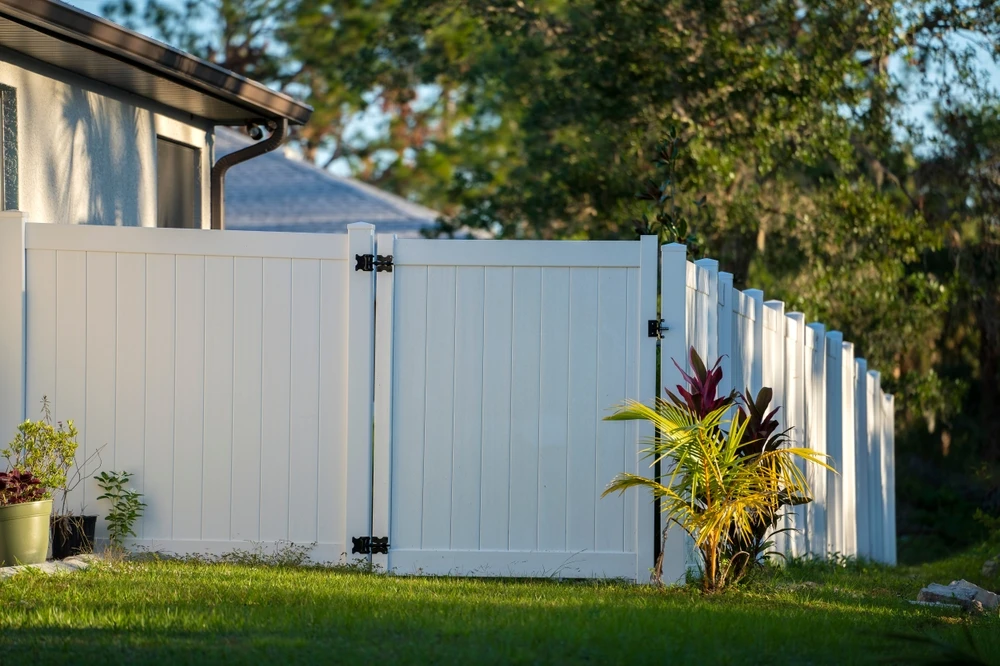
Fence anchorage properties are wrong, and you’ll know it by next spring. Panels warp. Posts lean. Gates won’t close. We’ve replaced fences that were less than two years old—not because of material failure, but because they weren’t built for what Anchorage yards actually face: shifting ground, freeze depth, high wind, and snow weight.
Your fence is more than a perimeter. It protects your property, controls access, adds value, and—when built right—lasts for years without problems. But it has to be designed for this city. That starts with the right material, the right depth, and the right crew.
What Anchorage Fences Really Have to Withstand
If you’ve lived in Anchorage long enough, you know the weather isn’t just unpredictable—it’s relentless. Your fence doesn’t just need to hold up in snow. It needs to survive months of moisture buildup, shifting soils, pressure from snowdrifts, and sudden wind gusts that hit harder than most realize. And after that, it still needs to look good through a long, bright summer.
These are the real forces your fence will face:
- Freeze-thaw cycles that shift or lift shallow posts
Anchorage ground doesn’t stay frozen. It thaws mid-winter, refreezes, then shifts again in spring. If your fence posts aren’t set deep enough or properly backfilled, they’ll rise unevenly, lean, or work themselves loose—especially in the second or third season. - Snow load that pushes or warps long panels
Some yards get hit with drifting snow that adds hundreds of pounds of sideways pressure. If your fence has long, unsupported spans or lightweight fasteners, the panels can crack, bow, or break loose under load. - High winds in exposed areas like Bear Valley and Hillside
We’ve seen gusts lift entire fence sections out of alignment—especially solid panels that act like sails. If a fence isn’t built to allow wind through (or braced for what can’t be avoided), it’s going to fail in Anchorage’s open-lot neighborhoods. - Drainage issues that cause rot, rust, or instability
After snowmelt, yards can stay soggy for weeks. If your fence is set in low-lying soil without proper grading or a gravel base, water pools around the posts and invites rot, frost damage, or erosion that undercuts the structure. - UV exposure in long daylight summers that fades and weakens uncoated materials
It may seem minor, but 19+ hours of summer sunlight takes a toll. Wood that’s not sealed can dry, crack, and fade. Low-quality vinyl becomes brittle. Paint and stain wear down fast unless properly applied with UV in mind.
A good fence in Anchorage isn’t just meant to survive these conditions—it’s built to expect them. At Alaska Landworks, we design fences to handle this full list of stress points from the start. Because if you’re only planning for snow, you’re going to have problems long before next winter.
Material Matters, But It’s Not the Only Factor
We’ve replaced plenty of fences that technically used good materials—but still failed early because of poor installation choices. It’s not just what you build with—it’s how, where, and why you use it.
Wood works well in Anchorage—but only if it’s sealed, elevated off soggy ground, and set in deep, well-drained posts. Vinyl holds up to snow, but cheap products turn brittle fast when temperatures drop. Even metal fences rust if the powder coat fails or if posts are set in pooled water without drainage.
At Alaska Landworks, we don’t start by asking what kind of fence you want. We start by evaluating the property—slope, soil type, wind exposure, and drainage—and recommend materials that will actually last in those conditions.
Here are some of the common fencing types we install, and when they work best:
- Cedar fencing:
Offers a durable, natural look and handles Anchorage moisture better than untreated softwoods. It’s a top choice when aesthetics matter, but it has to be installed with sealed cuts, proper spacing from ground level, and strong structural support to survive multiple winters. - Vinyl fencing:
Great for low-maintenance privacy fencing—provided it’s a high-quality product with reinforced rails and posts. We avoid big-box vinyl that becomes brittle in extreme cold and use pro-grade lines that are built to flex slightly under snow load or wind. - Metal and aluminum fencing:
Strong and stylish—ideal for securing front yards, sloped properties, or exposed areas that take wind head-on. Powder-coated finishes prevent rust, and installation must include frost-depth posts and tight connections to handle Anchorage gusts. - Chain link with vinyl coating:
still one of the best-value options for large yards, dog runs, or perimeter fencing. The vinyl coating prevents corrosion, and it holds up well to snowdrift pressure when tensioned and supported properly.
Each material has a role. But none of them work without the right base: compacted soil or gravel footing, drainage control, proper frost-depth setting, and site-specific spacing. That’s what turns a good product into a long-lasting fence. We don’t just build with the right materials—we make sure those materials have the right foundation to do their job.
Avoid Fence Post Failure
Most fence failures we see in Anchorage start at the post—not the panel. A fence can be made of premium material, but if it’s standing on shallow, poorly prepped footing, it won’t last through a single freeze-thaw cycle. We’ve pulled out posts installed by out-of-state crews that were barely 24 inches deep—well above Anchorage’s frost line. Once winter sets in, those posts move, lean, or crack. By spring, the entire line is off.
That’s why post-installation isn’t just a detail—it’s the foundation of the job. At Alaska Landworks, we anchor every post to handle real-world ground conditions, not just pass inspection.
Here’s what we do differently to keep posts from failing:
- Dig 36–48” to reach below Anchorage’s frost line
Anchorage’s frost depth requires deeper digging than in most parts of the country. We always go below the active frost zone—typically 36–48 inches depending on location—so ground movement happens above the base, not through it. - Backfill with gravel for drainage, not just soil
Backfilling with native soil traps moisture and causes frost heave. We use compacted gravel at the base and around the post to let water drain and relieve pressure during freeze-thaw cycles. - Compact in lifts to avoid soft spots and frost gaps
Dumping all the gravel in at once leads to air pockets and weak points. We fill and compact in layers—also known as “lifts”—to eliminate voids that cause movement and settling over time. - Reinforce corner and gate posts to handle load stress
Corners and gates take the brunt of tension and movement. We beef up these posts with wider holes, deeper anchors, or concrete collars (as needed) to keep them straight and strong—even when slammed with snow, wind, or regular use.
If your contractor can’t explain how they’re anchoring your posts—or tells you they “don’t need to go that deep”—you’re looking at a future repair. A solid fence starts underground. Everything else builds from there.