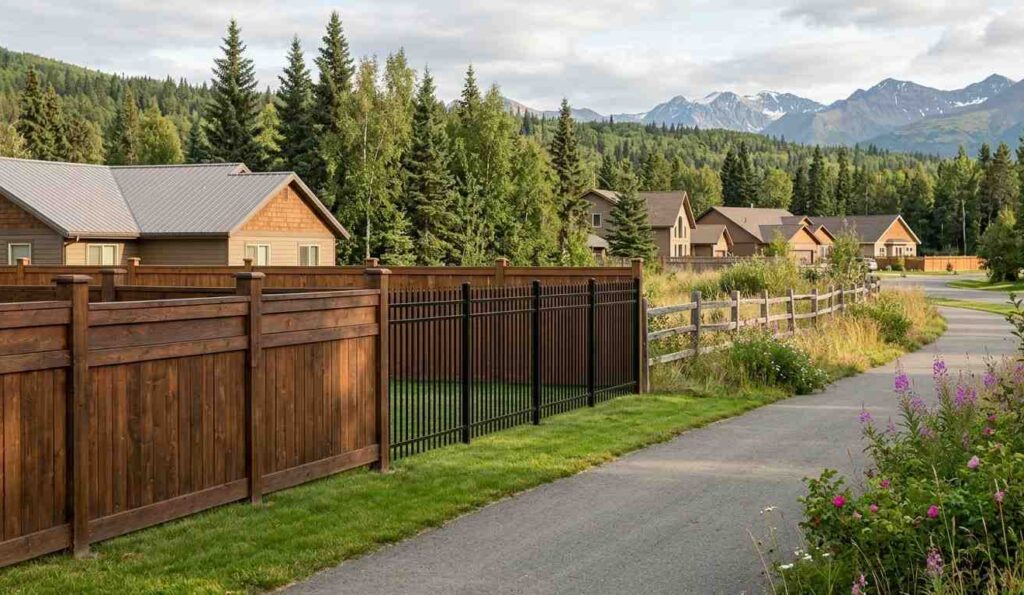
Alaskans value their privacy and their outdoor spaces. Whether you want to keep your dogs safely contained, block the stiff winds whipping through Eagle River, or simply create a private backyard oasis in Midtown, a high-quality fence is a must-have for local homeowners.
But building a fence in Southcentral Alaska is a completely different ballgame than building one in the Lower 48. A style that works perfectly in California might snap, lean, or blow over during its first Anchorage winter. When you factor in deep frost heave, heavy snow loads, and the occasional wandering moose, choosing the right material and design becomes critical.
If you are planning to upgrade your property this summer, you need a barrier that looks beautiful and is engineered to survive the elements. Let’s explore the top fencing styles for Eagle River and Anchorage homes, their pros and cons, and what it takes to install them correctly in our extreme climate.
Why Alaskan Fences Fail (And How to Avoid It)
Before you choose a style, it is crucial to understand what your fence will be up against. The climate in Anchorage and Eagle River puts immense stress on outdoor structures.
- Frost Heave: The freeze-thaw cycle of Alaskan soil is a fence’s worst enemy. If the posts are not set deep enough (well below the frost line), the expanding winter soil will physically push the concrete footings out of the ground. By spring, your fence will look like a rollercoaster.
- Extreme Wind Loads: Homes in Eagle River, the Anchorage Hillside, and Turnagain Arm experience hurricane-force wind gusts during winter storms. Solid privacy fences act like massive sails; if the posts and brackets aren’t heavily reinforced, the wind will flatten them.
- Snow Accumulation: When you or the city plows snow against a fence line, the sheer weight of the compacted snow and ice can warp panels and snap rails.
To combat these issues, proper residential site work and professional installation are just as important as the material you choose.
The Top Fencing Styles for Southcentral Alaska
When you are ready to invest in professional fencing, these four styles offer the best combination of durability, aesthetics, and functionality for Alaskan homes.
1. Western Red Cedar Privacy Fencing
Cedar is the undisputed king of traditional Alaskan fencing. Unlike pine or spruce, Western Red Cedar contains natural oils that make it highly resistant to rot, decay, and insect damage—perfect for enduring wet Anchorage summers and snowy winters.
- The Pros: It provides total visual privacy and excellent wind blocking. Cedar is incredibly beautiful, offering a classic, rustic look that blends perfectly with the Alaskan landscape.
- The Cons: It requires maintenance. To keep it looking fresh and prevent it from turning a weathered gray, cedar needs to be cleaned and re-stained every few years. Furthermore, because it is a solid barrier, it requires heavy-duty posts set deep into the ground to withstand local wind loads.
- Best For: Homeowners wanting maximum privacy, noise reduction, and a traditional, high-end look.
2. Chain Link Fencing
It might not win awards for aesthetic elegance, but commercial-grade chain link is arguably the most resilient fencing option for the Alaskan climate.
- The Pros: Chain link is highly affordable, incredibly durable, and virtually maintenance-free. Crucially, its open-weave design allows extreme winter winds and heavy snow to pass right through it, meaning it will almost never blow over. It is also excellent for keeping large dogs securely in your yard.
- The Cons: It offers zero privacy (unless you add privacy slats, which then turns it into a wind sail) and has an industrial appearance.
- Best For: Budget-conscious homeowners, large properties, dog runs, or backyards where preserving a scenic mountain view is more important than privacy.
3. High-Quality Vinyl Fencing
Vinyl fencing has exploded in popularity across Anchorage because it mimics the clean look of painted wood without the grueling maintenance. However, Alaskans must be very careful about the quality of vinyl they choose.
- The Pros: Vinyl never needs to be painted or stained. It won’t rot, warp, or splinter, and you can simply wash it down with a hose in the spring.
- The Cons: Cheap, big-box-store vinyl becomes brittle in sub-zero temperatures. If an ice chunk hits it or a moose bumps it at -10°F, thin vinyl will shatter like glass. To survive in Anchorage, vinyl fences must be premium-grade, thicker-walled, and reinforced with internal aluminum channels inside the posts and rails to handle the cold and wind.
- Best For: Suburban neighborhoods, modern residential landscape design & install projects, and homeowners who want a strict “no maintenance” solution.
4. Ornamental Steel or Iron
If you live on the Hillside or along the ridges of Eagle River, you probably bought your home for the view. The last thing you want to do is block the Chugach Mountains with a solid wood wall. Ornamental steel (often resembling traditional wrought iron) is the perfect premium solution.
- The Pros: It provides a highly sophisticated, elegant aesthetic while keeping kids and pets safe. Like chain-link, it allows wind and snow to pass through effortlessly. Modern ornamental fences are chain-link, to prevent rust, and can easily last decades in the Alaskan elements.
- The Cons: It is generally the most expensive fencing option and provides no visual privacy.
- Best For: High-end homes, properties with spectacular views, and front yard decorative perimeters.
Crucial Installation Factors for Alaskan Fences
Choosing the style is only half the battle. How it goes into the ground determines if it will survive.
When you hire a professional contractor, they should prioritize the following:
- Post Depth: In Southcentral Alaska, fence posts must be buried deep to get below the frost line—typically a minimum of 36 to 48 inches deep, depending on the soil type.
- Proper Drainage: If the ground around your fence line holds water, frost heave is guaranteed. Integrating your fence installation with proper yard grading ensures water sheds away from the post footings.
- Property Lines and Utility Locates: Never guess where your property line is. Always review your as-built survey. Additionally, Alaska law requires contractors to call for utility locates before digging any holes to avoid striking buried gas or electrical lines.
(For detailed information on municipal property setbacks and fence height restrictions, you can review the Municipality of Anchorage Land Use and Zoning codes.)
Upgrade Your Curb Appeal with Alaska Landworks
A new fence defines your property line, secures your family, and dramatically boosts your home’s curb appeal. But to get it right, you need a team that understands the unique engineering required for the Alaskan climate.
At Alaska Landworks, we don’t just build fences; we integrate them seamlessly into your overall residential landscape services. From navigating rocky glacial till during excavation to setting posts that defy frost heave, our local crews build barriers designed to last for decades.
Ready to transform your yard and secure your privacy? Contact Alaska Landworks today to schedule your summer fence installation consultation!
Frequently Asked Questions (FAQs)
How deep do fence posts need to be in Anchorage?
To prevent frost heave, fence posts in Anchorage and Eagle River typically need to be installed at least 36 to 48 inches deep, well below the local frost line. Setting posts too shallow is the number one cause of leaning and failing fences in Alaska.
Do I need a permit to build a fence in Anchorage?
Generally, if you are building a standard residential fence that is 6 feet tall or lower in your backyard (or 4 feet or lower in your front yard setback), you do not need a building permit from the Municipality of Anchorage. However, you must always adhere to property lines, utility easements, and clear-vision triangles at intersections.
Can I build a fence that keeps moose out of my yard?
While a standard 6-foot wooden privacy fence will deter most casual wildlife, a determined, hungry moose can easily push through or step over standard fencing if snow is piled high. True moose-exclusion fences often need to be 8 feet tall or higher, which may require special municipal variance permits depending on your zoning. (Check with the Alaska Department of Fish and Game for wildlife deterrent strategies.)