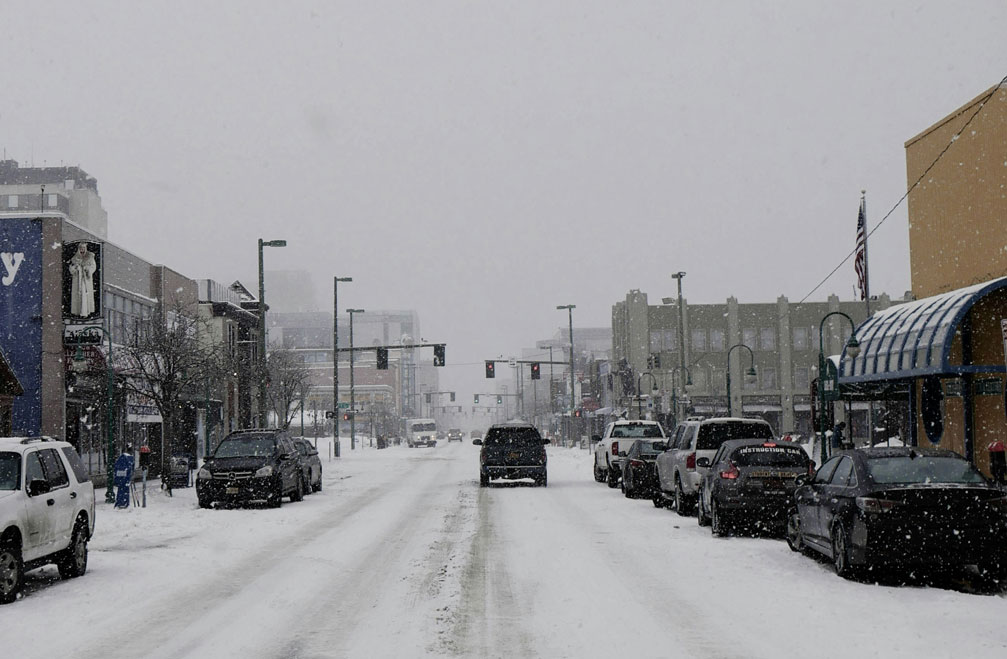
Snow removal across Anchorage varies widely depending on elevation, exposure, and which agency maintains nearby roads. Some areas accumulate deeper snow, while others experience drifting or frequent freeze–thaw cycles that compact snow quickly. When a major storm hits, the Municipality of Anchorage and the State of Alaska follow strict priority routes, which means residential streets may wait even when nearby main roads are already cleared. Understanding how this system works helps homeowners plan their own driveway and walkway needs regardless of where they live in the city.
In Short
- Anchorage neighborhoods receive snow removal based on road priority, not geographic order.
• Snow accumulation differs between areas due to elevation, wind, and exposure.
• Homeowners stay safer when they plan for driveway and walkway clearing while waiting on municipal plow schedules.
How Municipal and State Snow Plowing Is Structured
Anchorage Street Maintenance clears roads based on functional category rather than neighborhood. Arterials, collectors, bus routes, and hospital connectors are handled first. Residential streets only receive full attention once a storm passes and the municipality declares a citywide plow-out. Under normal conditions, crews aim to complete residential streets within roughly 84 hours. If another storm arrives during a plow-out, crews switch back to main routes before returning to neighborhoods.
The State of Alaska follows a separate priority system for highways and major state routes. These roads are grouped from Priority 1 to Priority 5, with high-volume and safety-critical corridors cleared first. State plowing can happen much earlier than municipal plowing depending on location. Some properties may see a nearby state road cleared quickly while their residential loop remains untouched because it falls under municipal responsibility.
This system explains why timing differs so much from one homeowner to another, even within the same general part of town.
How Anchorage Neighborhoods Experience Snow Differently
Anchorage’s neighborhoods—such as Muldoon, East Anchorage, South Anchorage, Hillside, Midtown, the Lake Otis/Abbott corridor, Eagle River, Jewel Lake, and West Anchorage—each sit in unique pockets of elevation, wind patterns, and tree cover. These factors influence how storms affect both private driveways and public roads.
Higher-elevation areas, like parts of Hillside and Eagle River, hold colder surface temperatures. Snow compacts faster, sticks longer, and often requires more frequent driveway work. Open or wind-exposed areas tend to drift, pushing snow across driveways even after plows pass once. Areas closer to waterways and large open spaces can experience heavier melting during the day and stronger refreezing at night.
Dense residential areas, such as many parts of Midtown or Lake Otis/Abbott, may see main corridors cleared earlier because they function as collectors. Side streets off those corridors may have deeper ruts or longer waits, especially during long-duration storms. West Anchorage and Jewel Lake often deal with variable snow density and rapid condition changes influenced by shifting temperatures and lake-effect moisture.
A homeowner’s experience often depends less on the name of the neighborhood and more on elevation, sun exposure, wind load, and whether their nearest roads are state or municipal.
Why Homeowners Should Plan Beyond Municipal Plowing
Since the city clears arterials and collectors first, residential streets—especially loops, cul-de-sacs, and small feeder roads—can sit for hours or even days during a major event. Even when the main road near your home is clear, berms may block driveways, walkways may be icy, and private access areas may be unsafe.
Driveways, parking pads, and walking paths are not covered by the city or the state. These areas fall entirely on the homeowner, which is why many residents rely on residential snow services or Anchorage residential snow plowing to maintain access. When snow arrives in back-to-back cycles, municipal timing may not align with the immediate needs of daily driving, school drop-offs, deliveries, or mobility for older adults.
Homeowners who want more control often supplement city plowing by scheduling recurring visits, especially when the driveway is steep, shaded, or frequently drifted. Some properties require residential snow plowing and hauling when piles grow too large for the available storage space.
How Location Factors Affect Driveway and Walkway Conditions
Snowfall totals alone do not determine how difficult winter access becomes. Even within a single street, small property variations influence how snow builds up or melts.
Driveways facing north receive less heat and experience far more ice. Properties near wooded areas may see drifting when wind pushes snow across open pockets. Sloped driveways freeze faster after melting, creating slick surfaces that require more frequent clearing or sanding. Homes near large plowed corridors may receive heavier berms because plows push consolidated snow across driveways.
Some properties also channel meltwater toward walkways, creating repeated freeze–thaw layers that become difficult to see. Ice control becomes just as important as plowing in these areas to maintain safe movement around the home.
Residential grading or residential landscape services can help improve long-term drainage patterns if certain areas repeatedly collect water and freeze.
What Homeowners Should Watch For During Heavy Winter Cycles
Monitoring conditions after storms helps determine when professional services may be needed. Homeowners benefit from paying attention to several patterns throughout winter.
One is how quickly the nearest main road is cleared compared to side streets. Another is how long berms block driveways after plows run through the area. Watching where ice forms helps determine whether conditions stem from drainage, road configuration, or sun exposure.
Tracking these patterns over a few storms helps homeowners understand whether their neighborhood tends to lag during municipal plow-outs or whether their property layout creates unique access issues. This makes it easier to decide when to rely on personal equipment and when to schedule residential snow services for safe, consistent access.
FAQ
- Who provides residential snow removal for large driveways?
Providers offering residential snow services can clear long or wide driveways using equipment sized for heavier accumulation. - Where can I find snow removal for steep or difficult driveways?
Specialized crews handle steep, narrow, or curved driveways with the right equipment to maintain traction and access. - Are there residential snow removal companies offering seasonal contracts?
Yes, seasonal contracts are available for homeowners who want predictable winter support throughout all storm cycles. - Are there residential snow services available in the Mat-Su Valley?
Homeowners in the Mat-Su region can access plowing, shoveling, and hauling depending on site needs. - Can snow removal be combined with landscape or site work services?
Snow removal can be coordinated with residential landscape services or residential site work to improve access and drainage.
Anchorage neighborhoods experience winter differently due to elevation, exposure, and the mix of municipal and state plow priorities. Road crews clear the routes that move the most traffic first, leaving residential streets to be handled once major corridors are open. Homeowners who understand how this system works can better plan driveway and walkway clearing and decide when to use residential snow services for safe, reliable access. Having a strategy in place ensures your home stays manageable even during long storm cycles.
To schedule residential snow support tailored to your area, you can contact Alaska Landworks.