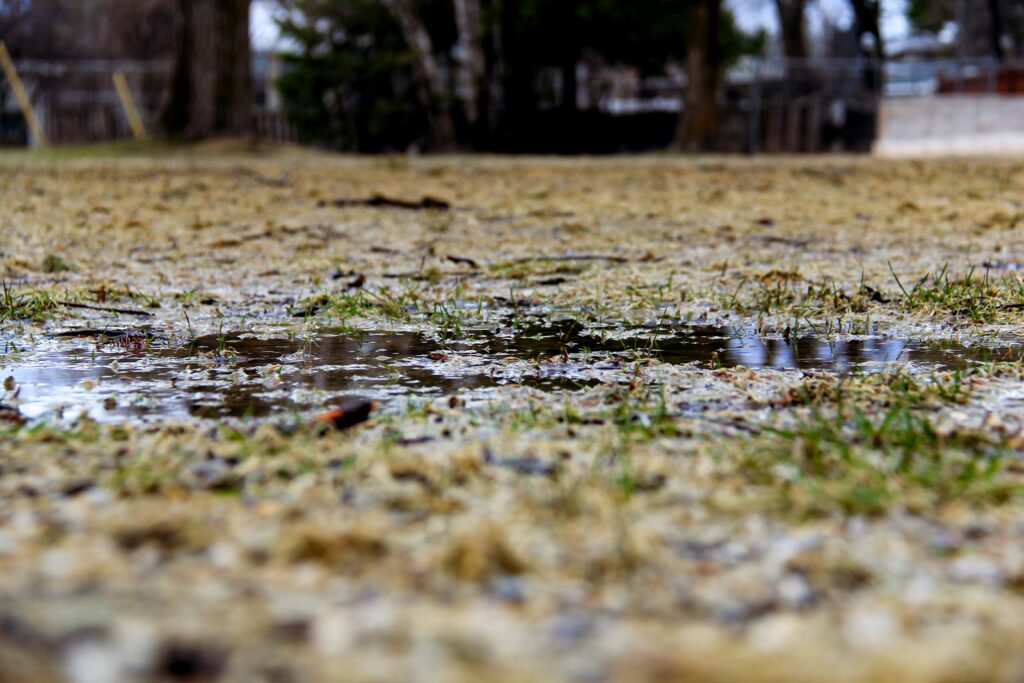
Topsoil in Anchorage, AK, properties relies on disappearing every year with the snow—and the fix isn’t more topsoil. It’s better planning. Each spring, the same patterns emerge: sunken turf, exposed patches, soggy footprints, and muddy runoff trails where lawns should be recovering. Every year, we drop new loads of screened soil, level them, and reseed. But nothing sticks. Why? Because most topsoil projects in Anchorage fail before the first shovel of dirt is delivered.
The Real Reason Anchorage Keeps Losing Soil
Anchorage ground conditions are uniquely punishing. Snow piles compress the soil for months, causing weeks of intense runoff as the frozen ground thaws unevenly. The topsoil doesn’t just wash away—it’s stripped off by movement, weight, and water with nowhere to go.
And yet, most soil installation plans don’t account for:
- Where snow gets stored
- How water exits the site
- What’s underneath the new soil
Without that context, even the cleanest screened blend turns into sludge or gets redistributed to the wrong places by May.
It’s Not a Drainage Problem. It’s a planning problem.
People often blame drainage, but the underlying problem is structural. Topsoil is a finishing layer—it doesn’t fix slope. It doesn’t correct compaction. And it can’t carry the weight of snowplows or foot traffic if it’s floating on an unstable subgrade.
When topsoil is added to ungraded or already compacted zones, two things happen:
- The topsoil settles inconsistently, creating uneven lawns and water traps.
- Water hangs in the soil instead of draining down, leading to root rot, moss, or erosion.
That’s why we never apply soil without a slope review and often begin with grading services near me to shape runoff paths before the first delivery.
What Actually Works
The solution isn’t a better topsoil blend. It’s installing topsoil as part of a sitewide system—with grading, compaction, and slope all working together. Successful soil installs in Anchorage share a few core traits:
- Soil is placed only after base reshaping and decompaction.
- Depth is adjusted to site use, exposure, and runoff.
- Soil is compacted in thin lifts to hold shape through freeze-thaw cycles.
- Snow storage areas are rotated or regraded to stop compaction damage.
The best results come from treating topsoil as the last step, not the fix.
A Real Fix in a Problem Area
One Anchorage site had a recurring issue behind a structure where snow was stored. Every spring, the soil slid downslope, leaving exposed geotextile and ponding runoff. Previous contractors kept refilling it with new dirt each year. We declined to do the same. Instead, we excavated the slope, reshaped the grade to reduce flow velocity, and created a berm to redirect meltwater. Then we placed soil in compacted lifts, locking it into the new base. Two years later, the same zone is intact—no erosion, no new fill needed.
Why Compost-Heavy Soil Doesn’t Hold Up
Screened topsoil with high compost content might look rich and dark, but in Anchorage’s spring cycle, it often fails. Excess compost breaks down too quickly and increases saturation risk. It’s fine for garden beds with excellent drainage—but a mistake for snow storage zones or high-foot-traffic lawns. What holds up better? A blended mix with enough mineral structure to support compaction, enough organic matter for roots, and screened sizing to reduce compaction in the first place.
Our Anchorage landscapers don’t just install soil—they evaluate the long-term exposure of each area and tailor the blend to hold up through freeze-thaw and runoff.
Watch the Edges
Another overlooked failure point: edges. Topsoil laid right to the edge of pavement, concrete, or retaining walls often sloughs off unless supported or protected. That creates a slow creep of soil loss into walkways and parking areas—and exposes landscape fabric or pipework underneath.
Anchorage sees more of this than other cities due to plow movement and snowdrift buildup. The edge is where everything breaks first, and it’s often where the budget cuts corners.
We reinforce these zones with grading transitions, edge protection, or shifting planting plans to buffer the movement.
Spring Isn’t Too Late—But It’s Not Early Enough
If you don’t review a site until late May or June, the damage has already occurred. Water has carved new ruts, soil has shifted, and compaction is already locked in. That means work becomes reactive—more expensive and harder to control.
The right time to solve a soil problem is as the snow starts to melt. That’s when water patterns are visible, compaction zones are obvious, and the reshaping can happen before the site greens up.
If your site is losing soil, collecting water, or starting over every spring, you don’t need more topsoil—you need a plan. We design long-term solutions built around Anchorage conditions, not one-season fixes. Submit a request for a quote on our lawn care services Anchorage page. We’ll schedule a site review that starts with the ground, not the symptoms.